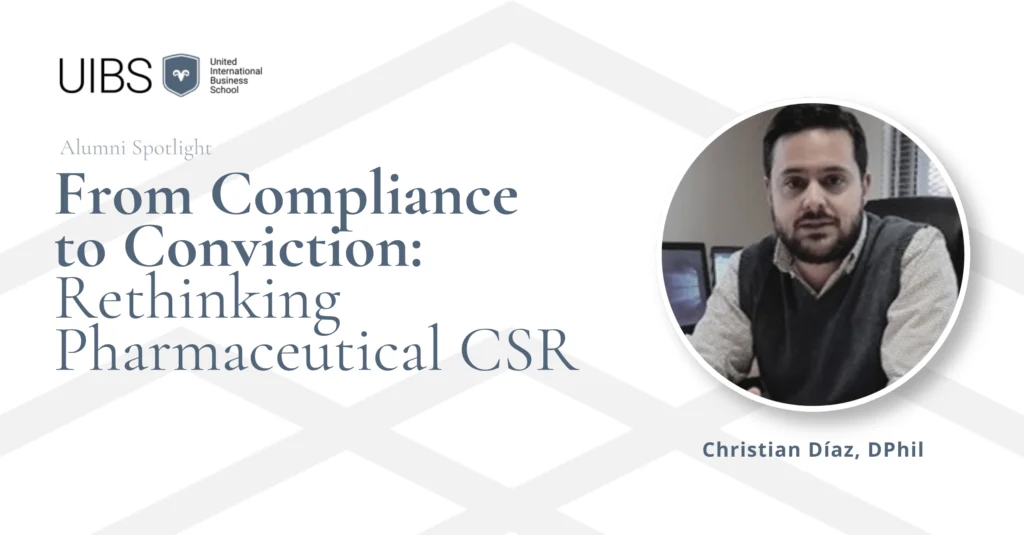
In this spotlight, DPhil in International Management graduate Christian Díaz shares insights from his doctoral thesis, revealing how Uruguayan pharma SMEs are going above and beyond regulatory mandates to drive real CSR.
Your thesis focused on CSR within Uruguay’s pharmaceutical industry, a sector made up mainly of SMEs, heavily regulated, and situated in a developing country. Given that particular context, what surprised you most, or was hardest for you, in researching how CSR is implemented there?
I was surprised to find the opposite of what I expected. In such a heavily regulated sector, you’d assume sustainability stops at “comply with the rules and that’s it.” But the executives I interviewed went far beyond that: they talked about access to medicine, authentic collaborations, the almost vocational purpose of the industry. There’s a genuine conviction that doesn’t show up on paper.
It was also a discovery for me that almost everyone saw CSR as a “risk-free” activity. And that’s a blind spot: sustainability, poorly managed, can also carry reputational, financial, and other costs. It’s worth keeping that on the table.
The hardest part? Researching the very industry where I built my career. I’ve been in it for more than 15 years, and I know many of the people involved. That opened every door for me — I managed to get all 20 companies to participate — but it demanded double the rigor from me. Oh, and coordinating 20 in-person visits in the middle of Uruguayan January… quite the sport.
You’re now analyzing other sectors to identify common ground and recurring best practices. Which industries are catching your attention lately, and what do you think one sector could “borrow” or learn from another?
I’m drawn to sectors facing pressures similar to pharma’s — heavy regulation, reputational exposure, SME-heavy structure — but that have already traveled part of the road. I’m also paying close attention to what’s being published on public utilities, the food industry, and retail more broadly. They all have something to teach.
What could pharma “borrow” from the others? Two things. First, the way other sectors communicate their sustainability efforts: through real dialogue, simple indicators, and without megaprojects that can undermine good intentions from the start. Second — and to me the most valuable — putting people at the center. In my research that was one of the most powerful factors, and also one of the cheapest.
But it works the other way too: the pharmaceutical sector has something huge to offer. The culture of traceability, of “every piece of data has to be auditable,” is exactly what would give credibility to sustainability reports in many other industries.
You talk about building a kind of “roadmap” for CSR to grow at a national level. If you had to choose one first step — the most urgent one — for SMEs to start advancing on sustainability without putting their economic viability at risk, what would it be?
If I have to pick a single first step, it would be starting with what generates impact without putting cash flow at risk. Many SMEs believe sustainability is synonymous with major investment, and that’s not true. Energy efficiency, waste management, cleaner technologies: one of the companies I studied documented 25% savings from more efficient equipment. There, sustainability doesn’t compete with the business — it strengthens it.
Very close behind, I’d put the focus on people. Involving and taking care of employees is the highest-return, lowest-cost form of CSR an SME can practice.
And a practical piece of advice: make use of what already exists. In Uruguay there are tools like the Investment Promotion Law or the Donations Law that allow companies to pursue sustainability with tax benefits. The first step is often not about inventing something new and expensive, but about organizing and showcasing what the company is already doing well.
Do you feel that the training and way of working in the UIBS doctoral program gave you the tools you needed to tackle a topic as complex, and with as much social and economic impact, as this one?
Absolutely. UIBS gave me exactly what this topic demanded: method, scientific rigor, and an international perspective. When I started — at the end of 2021, in the middle of the pandemic — I wasn’t entirely clear on how to approach something so complex and so little explored. The program taught me how to structure the research and sustain rigor from start to finish.
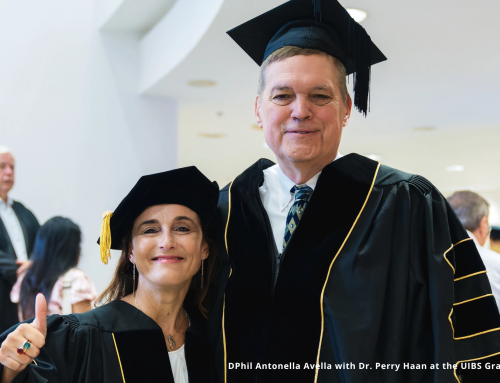
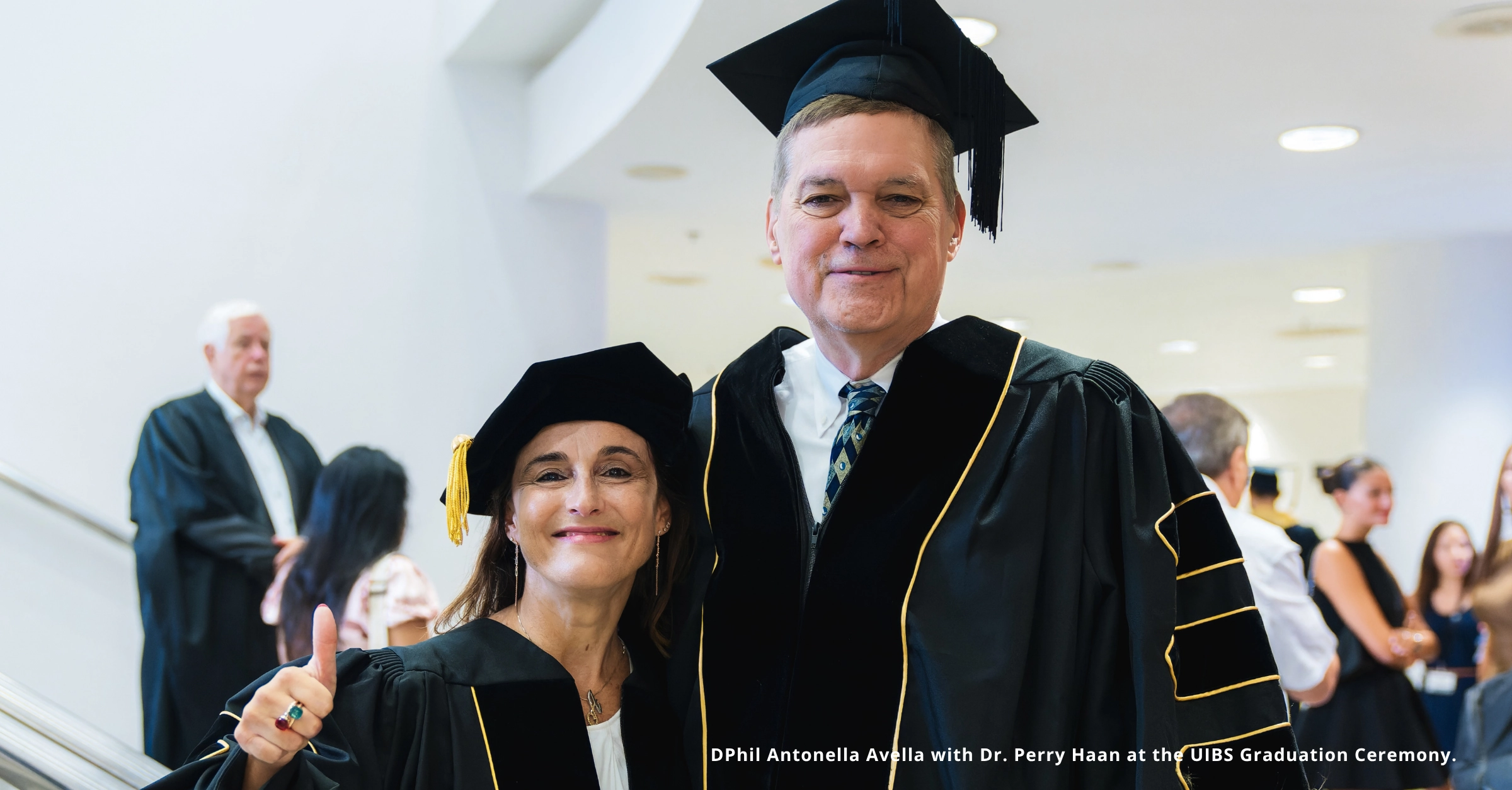
But beyond the technical side, what I valued most was the human support. My advisor, Prof. Dr. Perry Haan, was key: he didn’t just guide me — he made the whole process an enjoyable experience. And sharing the journey with colleagues from different countries, with such varied experiences, gave me a comparative outlook that’s now central to what I research. I came out of it with the tools… and with the humility of knowing there’s always more to learn.
Advice for the community: For those trying to advance CSR or sustainability in difficult, heavily regulated contexts like yours, what advice would you give them? In other words, what’s the first thing they should keep in mind?
First: understand your own context before copying recipes from elsewhere, especially from very different contexts with different resources (this applies both to companies and to those responsible for designing public policy on CSR). What works for a large company in a developed country almost never transfers as-is to an SME in a developing country. Copying “canned” models without adapting them usually ends up in fragmented efforts that go nowhere.
Second: don’t wait for regulation to push you. Where the framework is weak, the real driver is the leadership and values of whoever is making the decisions. It’s worth starting small, with authentic actions consistent with the company’s culture, rather than a big, empty report that raises suspicion.
And third: talk to and learn from those who are already doing it well in similar contexts. Building networks with other companies, chambers of commerce, academia, and NGOs speeds everything up. I’ll close with a line that appears near the end of my work: it’s not fair to wait for the path to appear… you have to forge it.”
How can future leaders transform complex sustainability challenges into driving forces for meaningful, lasting change?
Christian’s journey from regulatory compliance to deep ethical conviction reflects the core vision behind UIBS’s Master in Responsible Innovation and Strategic Entrepreneurship (RISE) and Master in Sustainable Business Impact.
Designed to bridge academic rigor with real-world application, these graduate programs invite change-makers to examine environmental, social, and governance (ESG) realities through a critical, hands-on lens.
Discover these programs here: RISE & Impact Masters.