AI can generate ideas in minutes. Deciding which ones deserve to exist still takes human judgment.
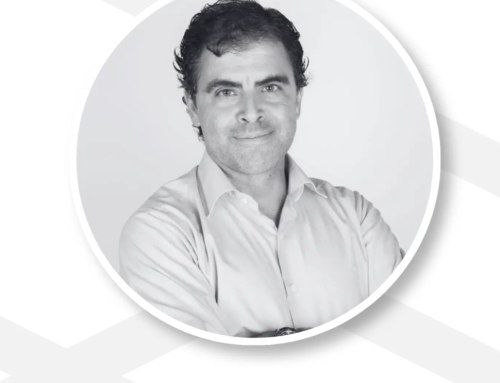
Prof. Dr. Nik Neshat, who teaches Innovation at UIBS and leads the Logistics Innovation Lab at VNL Schweiz, explains how he prepares students to use AI as a partner, not a substitute, and to turn ecosystems, regulation and corporate politics into opportunities.
- Frontier Tech & AI-Driven Innovation
Generative AI has basically compressed innovation cycles from years down to weeks. So, how do you teach students to actually use AI for ideation and prototyping, without letting them lose the human judgment and empathy that good innovation still depends on?
Generative AI is the best ideation partner my students will ever have, and the worst judge. I want them to understand both halves of that sentence.
In my classes, AI enters at the right time and in the right place. Students begin by sitting with real users and writing the problem down in their own words; only once they own the question do they bring in the machine. With my bachelor students I stage this deliberately; my master students learn to make the call themselves. The comparison is always revealing: AI floods them with fluent, plausible ideas, while the one worth building usually traces back to something a human noticed that no dataset could have told them. That contrast teaches more about judgment than any lecture could.
What I reward reflects what the world will reward. A beautifully polished, AI-assisted prototype built on a lazy problem statement goes nowhere once the course is over. A rougher concept resting on a sharply framed, deeply understood human need has a future, in a start-up, in a corporation, wherever their path leads. So the framing and the reasoning carry as much weight with me as the build and its defense. Students sense this quickly, and they learn to use AI generously for speed and variety while keeping the framing, the empathy and the final call for themselves.
2. Ecosystems, Platforms & Open Innovation
The old model of locking R&D inside your own walls is fading fast, it’s all about open ecosystems and platforms now. How do you get students ready to build and manage networks where you’re winning by partnering with startups, competitors, even third-party developers, instead of trying to do it all in-house?
I have the good fortune of teaching this subject while living it. As Managing Director of the Logistics Innovation Lab at VNL Schweiz, I spend my days orchestrating a network of corporations, start-ups and universities, many with competing interests of their own, none of whom report to me. Everything I teach about ecosystems comes from that experience.
So I bring the network into the classroom. Through the Lab, my students work on real Swiss challenges: they build digital twins for the logistics systems of tomorrow and help solve live construction logistics problems for our partners. With AI doing the heavy lifting, in what they cheerfully call vibe coding, they move from idea to working prototype in days. Then they present their work to the companies themselves and take the feedback directly. There is no better lesson in managing an ecosystem than standing in front of one.
The shift I want to produce in their thinking is from “what can we build?” to “what can we enable?” Once students watch a traditional company win by opening its problem to outsiders, and feel how much care the terms of that openness require, the old closed model stops looking safe. It starts looking slow.
3. Sustainable Innovation, ESG & Circular Economy
These days, innovation isn’t just chasing growth, it’s being pushed just as hard by decarbonization and circular economy demands. How do you get students to stop seeing ESG and regulation as a constraint, and start treating them as the actual spark for innovation?
I anchor sustainability where I know the pressure is real: in the supply chain. EV batteries, pharma cold chains, carbon-priced freight. On that terrain, decarbonization stops being an abstraction and becomes a design problem with money attached. The examples are mine; the method works in any industry.
My classroom rule is simple. A regulation is a design brief, not a checklist. We read CBAM, CSRD or the EU battery passport as advance notice of a market about to open. Who must comply? What will they pay for? What product or service does that create? The companies that move first end up selling solutions to the ones that waited, and I want my students in the first group.
Then we talk economics. No CFO is persuaded by good intentions, so I push every circular or low-carbon concept toward its business case: carbon avoided, materials kept in the loop, risk taken off the table. Reverse logistics and reusable packaging, familiar ground from my own practice, make the point nicely: a loop is a revenue stream waiting for a design. Students who think sustainability through this way never again mistake it for a constraint. They see it for what it is: the place where the next margin lives.
4. Intrapreneurship & Agility in Legacy Systems
Here’s the thing: most corporate innovation doesn’t die from a lack of good ideas, it dies because the legacy structure kills it. Given everything you’ve seen leading large-scale transformations, how do you teach students to actually pull off intrapreneurship, building those ‘innovation sandboxes’ and surviving the politics inside a traditional company?
The most useful lesson I carry from leading transformations at Johnson & Johnson and SR Technics is this: start embarrassingly small. I have seen more good ideas die from a big first ask than from a weak business case. Budget cycles, KPIs and risk committees form a kind of corporate immune system, and it attacks anything large and unproven. So I teach students to ask for one process, one site, one partner, a few weeks and almost no budget. Produce evidence inside the company, then let the evidence do the politics.
The second lesson is that navigating the organization is part of the job, not a distraction from it. I teach students to map the landscape before any pitch: who will sponsor an idea, who will block it, whose targets it threatens, and when in the budget year to ask. A sandbox survives only as long as a senior sponsor shields it, so winning that sponsor is a planned activity, never luck.
We practice on live cases from my Lab’s corporate partners, where students present their work to real organizations and discover that moving an idea through one is a skill, and a learnable one.
5. Future-Proofing Skills & Experimental Mindset
Frameworks go stale fast now, skills are becoming obsolete faster than ever. So what are you bringing into the classroom, design sprints, venture building, real stress-testing, to actually build that agile, comfortable-with-failure mindset that outlasts the course itself?
I bring the methods the question names: sprint-style projects, venture-like team builds through my Lab, and plenty of stress-testing. They work, and they make the course lively. But I hold one conviction above them all: methods age, and the skill that compounds is problem framing, the discipline of asking whether we are solving the right problem in the first place. That is what I drill hardest.
The experimental mindset grows out of how the course treats being wrong. A rigorous experiment that kills an idea cleanly counts as a success here, and I say so openly; once students believe that, experimenting becomes the rational choice rather than the risky one. They challenge one another’s concepts hard, learning to be wrong early and cheaply, in front of their peers, while it costs nothing but pride. And they reflect in writing on what changed their minds along the way, because I care less about who was right on day one than about who updated fastest.
None of this is hypothetical. Through my Lab, students prototype for real Swiss companies, so the failures sting a little and the successes get used. My ambition is modest and durable: students should leave carrying a reflex that outlasts every method I taught them. Frame sharply, test cheaply, update fast. That reflex doesn’t go stale.
Want to learn how to frame sharply, test cheaply and update fast? At UIBS, our RISE programs in Responsible Innovation and Strategic Entrepreneurship turn ideas into real projects, while our Impact Master’s in Digital and Sustainable Business prepare future leaders to turn technology and regulation into opportunity. For experienced professionals, the Impact MBA offers a path to lead change from within. Explore all our programs at uibs.org.